
Best electric vans for small businesses and trades in Essex from NEV Leasing
Share on:
.jpeg)
If you run a small business or work as a tradesperson in Essex, Suffolk or Norfolk and are considering replacing your van, now could be an excellent time to switch to electric.
For businesses that can charge their vans at home or at their premises, the financial savings can be compelling. However, choosing the right electric van means looking beyond the monthly rental and advertised driving range.
Your van is a working tool. It needs to save your business money without compromising your productivity.
Is an electric van cheaper to run than a diesel van?
If you can charge overnight at home using a low-cost electricity tariff, the potential savings are significant.
A diesel van covering 12,000 miles a year, averaging 35mpg and paying £1.50 per litre for diesel, would cost approximately £2,338 a year in fuel.
An electric van covering the same mileage, averaging 2.5 miles per kWh and charging overnight at 8p per kWh, would cost approximately £384 a year in electricity, before charging losses.
That represents a potential annual energy saving of approximately £1,950 – equivalent to £163 per month.
Although these figures are illustrative and will depend on your vehicle, electricity tariff and driving conditions, they demonstrate why comparing monthly lease rentals alone can be misleading. Have a look at some of our special offers
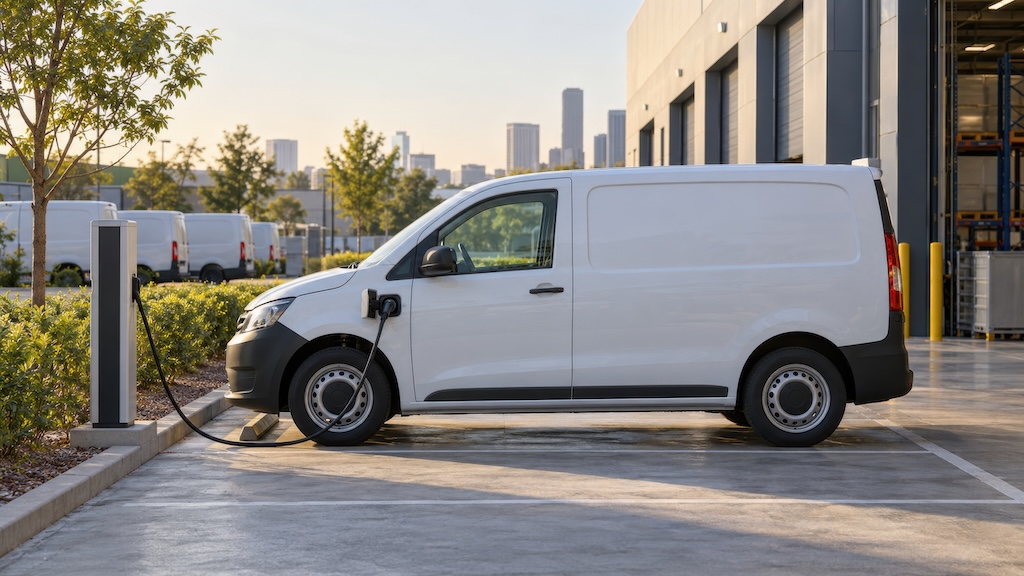
Ask NEV Leasing to compare the total cost of running an electric van against your current diesel vehicle.
Are electric vans practical in winter?
Yes, provided you choose a van with sufficient range for your working day.
Cold weather, motorway driving, heavy loads, roof racks and cabin heating can all reduce an electric van's range.
If your business typically covers 60–100 miles a day visiting customers around Chelmsford, Colchester, Ipswich, Bury St Edmunds or Norwich, many modern electric vans could comfortably accommodate your requirements.
However, if your journeys regularly involve travelling into London or covering several hundred miles across East Anglia, vehicle selection becomes more important.
Always allow a sensible margin between your longest regular working journey and the van's expected winter range.
Preheating your van whilst it is still plugged in at home can also help preserve battery range.
Which electric van is best for small businesses and tradespeople?
There is no single electric van that suits every business. Your choice should reflect what you carry, how far you travel and how you operate.
Some electric vans worth considering include:
- Kia PV5 Cargo: With an official range of up to 258 miles, it is worth considering for electricians, engineers and service businesses.
- Volkswagen ID. Buzz Cargo: Offering an official range of up to 277 miles, it could suit businesses requiring longer journeys but relatively modest load capacity.
- Ford E-Transit Custom: With an official range of up to 232 miles, it is a practical option for builders, plumbers and general tradespeople.
- Vauxhall Vivaro Electric: Offering an official range of up to 219 miles, it is an established medium-sized van worth considering for a variety of trades.
- Ford E-Transit: With an official range of up to 249 miles in certain specifications, it is an option for businesses requiring significantly more load space.
Official maximum ranges vary by specification and are not guaranteed real-world winter ranges.
Load dimensions, payload, towing capacity, seating, shelving and roof rack requirements should all influence your decision.
NEV Leasing can help you compare suitable vehicles from different manufacturers rather than limiting your choice to one brand. Take a look at some examples
Can I run an electric van without charging at home?
Yes, but the financial and practical benefits need closer examination.
Charging at your business premises could provide an excellent alternative. Relying predominantly on public rapid charging, however, can substantially reduce or even eliminate your fuel savings.
There is also a cost that many businesses overlook: your time.
If you are a self-employed tradesperson charging £50 an hour, spending 30 minutes at a public charging station could represent £25 in lost potential earnings if that time would otherwise have been billable.
A van that is sitting at a charging station rather than working is potentially costing your business money.
Ideally, your van should charge when you are not working, rather than interrupting your working day.
Is it better to lease or buy an electric van?
Business contract hire can provide predictable monthly expenditure, preserve working capital and remove the risk associated with future resale values.
Buying may suit other businesses, depending on their financial position, vehicle requirements and tax circumstances.
NEV Leasing can help you explore the alternatives and compare the overall costs before committing to a new vehicle.
Thinking of replacing your business van in Essex, Suffolk or Norfolk?
Whether you are a self-employed tradesperson, a local construction company or a small business operating several commercial vehicles, NEV Leasing can help you establish whether switching to electric makes commercial sense.
You don't need to have decided which van you want before speaking to us.
Simply tell us:
- What van you currently drive.
- Your typical daily and annual mileage.
- What tools, equipment or materials you carry.
- Whether you can charge at home or work.
- When you need your next vehicle.
We can help identify suitable electric vans, compare running costs and explore available leasing deals.
Request your personalised electric versus diesel van cost comparison from NEV Leasing today. Have a look at our our electric van models and talk to us today.
You may be surprised by how much your business could save – and if electric isn't right for your business yet, we can help you explore the alternatives.