
Five questions every Essex small business should ask before replacing or acquiring vehicles in 2027
Share on:
.jpeg)
If your business has company cars or vans due for replacement in 2027, existing lease agreements coming to an end or plans to acquire additional vehicles, now is a good time to start considering your options
Whether you operate two vehicles or twenty, the decisions you make could have a significant impact on your operating costs, cash flow and business productivity over the next three or four years.
For small businesses across Essex, Suffolk and Norfolk, vehicle acquisition should be about more than finding the cheapest monthly rental.
Here are five important questions worth asking before committing to your next vehicle.
-
What do we need our next vehicle to do – and how well does our current one do it?
The best vehicle for your business in 2027 may not be a direct replacement for the one you currently operate.
Your business may have changed considerably since you last acquired vehicles. Your employees may be travelling different distances, carrying different equipment or working in different locations.
Consider whether:
- Your current vehicles are the right size and specification.
- Your annual mileage has changed.
- Your fuel and maintenance costs could be reduced.
- Electric or hybrid vehicles could now meet your requirements.
- Your vehicles are supporting employee recruitment and retention.
- You need greater load capacity, towing capability or flexibility.
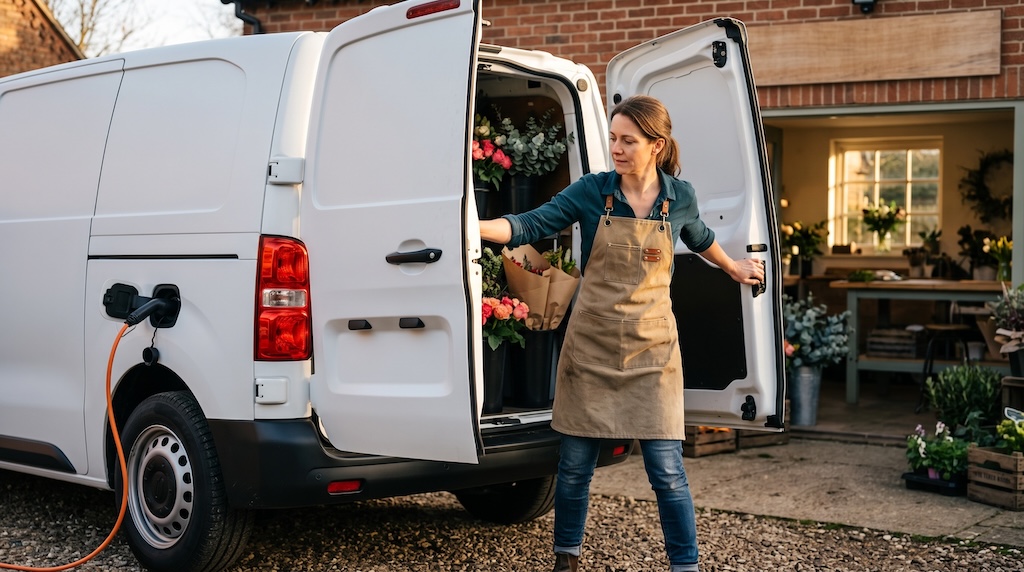
For example, a trades business operating locally around Chelmsford, Colchester or Ipswich may now find that an electric van charged overnight offers considerable running cost savings.
Equally, a business regularly travelling long distances across the UK may have very different requirements.
Start with what your business needs rather than simply replacing like for like.
-
What is the best way for a small business to fund its vehicles?
The best funding method depends on your business's cash flow, financial objectives, vehicle usage and tax circumstances.
Business contract hire, hire purchase, outright purchase and other finance arrangements each have advantages and disadvantages.
Whilst buying a vehicle may provide ownership, it also ties up capital and exposes your business to depreciation and future resale values.
Business contract hire can help preserve working capital, provide predictable monthly costs and remove the uncertainty of future vehicle values, although contractual mileage and return conditions need to be considered.
The choice between petrol, diesel, hybrid and electric vehicles can also influence which funding route makes the most financial sense.
With further changes to company car taxation scheduled over the coming years, businesses should consider costs across the entire period they expect to operate the vehicle.
NEV Leasing can help you compare vehicle funding options and whole-life costs before you commit.
-
How can we compare business vehicle deals without spending hours chasing quotes?
The most effective approach is to compare vehicles and funding options on a consistent, like-for-like basis.
Many small business owners spend hours contacting dealerships, searching leasing websites and requesting quotations, only to discover that the offers are difficult to compare.
Differences in initial payments, contract lengths, mileage allowances, maintenance packages and delivery times can make an apparently cheaper deal considerably less attractive.
Working with a vehicle leasing and procurement specialist gives your business a single point of contact to explore different manufacturers, funding providers and available offers.
It also means you can spend more time running your business rather than researching vehicles.
Ask NEV Leasing to source and compare suitable vehicle deals on your behalf.
-
Should we replace a company car or van early if a particularly good deal becomes available?
Potentially, yes. Waiting until your existing vehicle is due for replacement is not always the most cost-effective approach.
Manufacturer incentives, stock clearance offers and competitive leasing deals can create opportunities to secure significant savings.
However, any potential saving needs to be weighed against early termination charges, overlapping payments and the remaining value of your existing vehicle.
Knowing your replacement dates well in advance allows a proactive vehicle supplier to identify opportunities as they arise, rather than waiting until you urgently need a replacement.
If you have vehicles due for renewal at any point during 2027, it is worth starting that conversation now.
-
What should a good vehicle leasing supplier do for a small business?
A genuinely useful vehicle supplier should help your business make better decisions, not simply provide quotations when asked.
They should understand your business, monitor relevant offers, explain funding alternatives, help you assess new vehicle technology and support your future replacement planning.
For small businesses without a dedicated fleet manager, having access to this expertise can be particularly valuable.
You should have someone you can contact whenever a vehicle-related question arises, without having to start the research process again.
Planning your business vehicle replacements for 2027?
NEV Leasing works with small businesses across Essex, Suffolk, Norfolk and the wider UK, helping them source, fund and manage their vehicle requirements.
Whether you need one additional van, several replacement company cars or advice on reducing your overall vehicle expenditure, we can help.
You do not need to know which vehicles you want or be ready to place an order.
Simply share your anticipated 2027 vehicle requirements and replacement dates with us, and we can start exploring the options.
Contact NEV Leasing today to discuss your 2027 vehicle requirements and discover how we could save your business time and money.