

Should Your Essex or Suffolk Business Go Electric Now — or Wait?
Share on:
.jpeg)
Electric vehicles are becoming an increasingly common sight on the roads across Essex and Suffolk. More businesses are considering electric cars and vans because of lower running costs, attractive company car tax rates, improving vehicle range and growing pressure to reduce emissions.
However, many small business owners are still asking an important question:
Is now the right time to switch to electric vehicles, or would it be better to wait?
The answer is not the same for every business.
Not Sure Whether to Go Electric? Talk to us
An electric vehicle may already be an excellent choice for a company whose employees cover predictable daily mileage and can charge at home, at work or at a regular depot. For another business — particularly one that regularly travels long distances, carries heavy loads or has limited access to charging — petrol, diesel, hybrid or plug-in hybrid vehicles may still be more practical.
That is why choosing the right vehicle involves more than comparing monthly lease payments.
At NEV Leasing, we help businesses across Essex and Suffolk look at the complete picture, so they can decide whether going electric makes commercial and practical sense now.
Is an electric vehicle right for your business?
The first question is not:
“Should we go electric because EVs are the future?”
A better question is:
“Will an electric vehicle work for the way our business operates today?”
To answer that, it is useful to consider:
- How many miles your employees drive each year
- Whether journeys are mainly local, regional or nationwide
- Whether drivers return home or to a depot each evening
- Whether charging is available at home, at work or at business premises
- How often vehicles carry heavy equipment or loads
- Whether drivers regularly make long motorway journeys
- The monthly lease budget
- Fuel or electricity costs
- Company car tax
- The expected future use of the vehicle
A business based in Chelmsford, Colchester, Braintree, Ipswich, Bury St Edmunds or elsewhere in Essex and Suffolk may have very different vehicle requirements from another company only a few miles away.
A local service business completing predictable daily journeys may be well suited to an EV. A company whose employees regularly travel across the country may need a different solution.
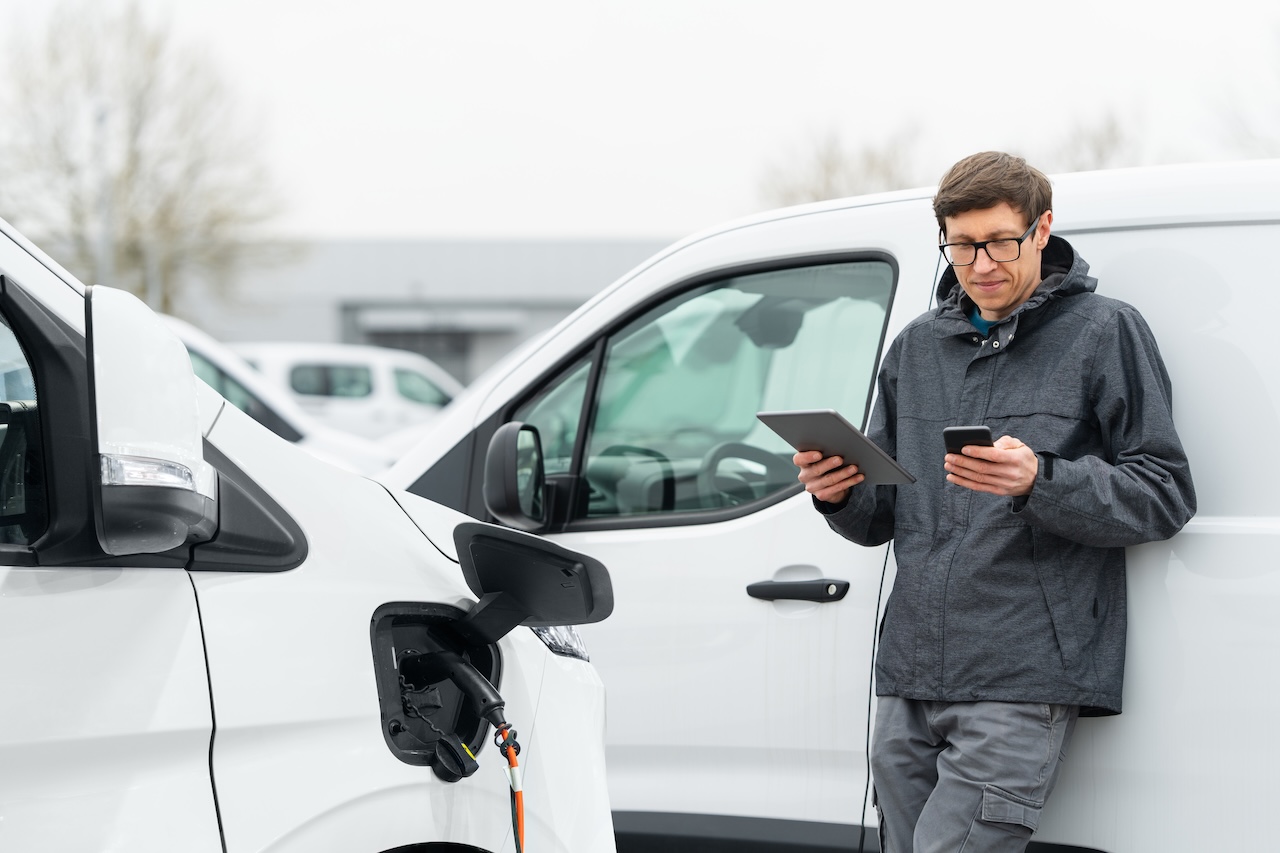
Are electric vehicles cheaper for small businesses?
Electric vehicles can offer lower running costs, but the savings depend heavily on how and where they are charged.
Businesses that can provide workplace charging or support employees with home charging may be able to reduce the cost of running company vehicles significantly. Electricity purchased on an off-peak tariff can be considerably cheaper than petrol or diesel on a cost-per-mile basis.
Electric vehicles can also have lower routine maintenance requirements because they have fewer moving parts than conventional petrol or diesel vehicles. There is no engine oil to change, and components such as brake pads may last longer because of regenerative braking.
However, the financial comparison should not stop there.
A business should also consider:
- The monthly lease rental
- Initial rental and contract length
- Insurance costs
- Electricity or fuel costs
- Charging equipment
- Vehicle range
- Maintenance arrangements
- Expected annual mileage
- Company car tax
- The effect of future road-charging policies
NEV Leasing can help businesses compare these costs rather than focusing only on the headline monthly rental.
What about the new e-VED charge from 2028?
The Government has confirmed plans for a mileage-based charge for electric vehicles from April 2028.
The proposed system, often referred to as e-VED, is expected to introduce a charge based on the number of miles an electric vehicle travels.
This has understandably caused some business owners to question whether they should continue considering electric vehicles.
However, the proposed charge should be viewed alongside the wider cost of operating an EV.
For example, at a proposed rate of 3p per mile, a vehicle travelling 10,000 miles a year could face an annual charge of approximately £300. That is equivalent to around £25 per month once the scheme is in operation.
For businesses taking out a three-year lease now, e-VED is not expected to begin until April 2028. Depending on the vehicle delivery date and lease start date, the charge may only affect the latter part of the agreement.
The final arrangements for leased vehicles are still to be confirmed. As Vehicle Excise Duty is already commonly incorporated into contract hire arrangements, leasing companies may develop a way of including or recovering e-VED through future rental structures or mileage adjustments.
The important point is that e-VED does not automatically make electric vehicles uneconomic.
Businesses should compare the proposed charge with potential savings on electricity, fuel, maintenance and company car tax.
What are the tax advantages of electric company cars?
For many businesses, the tax position remains one of the strongest reasons to consider electric company cars.
Fully electric vehicles continue to benefit from lower Benefit-in-Kind tax rates than most petrol and diesel alternatives. This can make an electric company car particularly attractive to directors, employees and businesses that provide vehicles as part of a remuneration package.
The exact benefit will depend on the vehicle’s list price, the employee’s tax rate and the relevant Benefit-in-Kind percentage.
An electric car may also work well within a salary sacrifice arrangement, allowing employees to access a new vehicle through deductions from gross salary while potentially benefiting from lower tax and National Insurance costs.
However, tax should be only one part of the decision. The vehicle must still be practical for the employee’s journeys and charging arrangements.
NEV Leasing can help businesses understand the differences between electric, petrol, diesel, hybrid and plug-in hybrid vehicles before they commit to a new agreement.
What about electric vans?
Electric vans are becoming increasingly capable, with more choice than ever before.
For businesses covering predictable daily routes, electric vans may offer lower energy costs and access to clean-air zones while reducing local emissions.
They may be particularly suitable for:
- Local delivery businesses
- Tradespeople working within a defined area
- Property maintenance companies
- Facilities-management businesses
- Local authorities and public-sector contractors
- Businesses making regular journeys around Essex or Suffolk
- Companies operating from a depot with overnight charging
However, range can be affected by payload, motorway driving, cold weather, towing and the use of heating or air conditioning.
For a business that regularly carries heavy equipment or travels long distances, an electric van may not yet be the best solution.
NEV Leasing can help compare real-world requirements with the available vehicles rather than relying only on the manufacturer’s official range figure.
Should your business switch its entire fleet to electric?
Not necessarily.
Many small businesses do not need to move every vehicle to electric at the same time.
A phased approach may be more practical.
For example, a business with several vehicles could begin by replacing the cars that:
- Cover predictable daily mileage
- Return to the same location each evening
- Have access to home or workplace charging
- Are mainly used for local or regional journeys
Vehicles that regularly travel long distances, carry heavy loads or operate in areas with limited charging infrastructure could remain petrol, diesel or hybrid for the time being.
This approach allows a business to gain experience with electric vehicles without changing its entire fleet at once.
It can also help identify the real operating costs and charging requirements before further vehicles are replaced.
Should your business wait for better electric vehicles?
Electric vehicle technology is continuing to improve. New models are offering longer ranges, faster charging and more choice at different price points.
It is understandable to wonder whether waiting another year or two would provide a better vehicle.
However, waiting also means delaying any potential savings on fuel, maintenance and company car tax.
The right question is not:
“Will electric vehicles be better in the future?”
They almost certainly will be.
The more useful question is:
“Is there an electric vehicle available now that meets our business requirements and provides good value?”
If the answer is yes, there may be little commercial benefit in delaying a replacement that is already due.
If the available vehicles do not meet your range, payload, charging or budget requirements, waiting may be the sensible decision.
How NEV Leasing can help Essex and Suffolk businesses
Choosing between electric, petrol, diesel, hybrid and plug-in hybrid vehicles can be complicated.
There is no benefit in recommending an electric vehicle simply because it is electric. The right choice depends on how the business operates.
NEV Leasing can help you consider:
- Your expected annual mileage
- Typical daily journeys
- Long-distance travel requirements
- Home, workplace or depot charging
- Vehicle range
- Payload and towing requirements
- Monthly lease costs
- Fuel and electricity costs
- Maintenance options
- Company car tax
- Salary sacrifice opportunities
- The potential effect of future e-VED charges
- Whether a phased move to electric would be more suitable
We can also compare different manufacturers and finance providers to help identify vehicles that suit your requirements.
Whether you operate one company car, a small fleet or a growing business with several vehicles, we can help you make a decision based on your actual needs.
So, should your Essex or Suffolk business go electric now?
For many businesses, the answer could be yes.
An electric vehicle may already offer lower running costs, attractive company car tax and a practical solution for employees who have convenient access to charging.
For other businesses, the answer may be not yet.
If your vehicles cover very high mileages, depend on rapid public charging, carry heavy loads or regularly make long journeys, a petrol, diesel, hybrid or plug-in hybrid vehicle may currently be more suitable.
The best choice is not always the vehicle with the lowest monthly rental or the newest technology.
It is the vehicle that works for your business, your drivers and your budget.
Speak to NEV Leasing before making your next vehicle decision
If you are based in Essex or Suffolk and are considering an electric car, electric van or small business fleet, speak to NEV Leasing before deciding which way to go.
We can help you compare electric and conventional vehicles, understand the likely costs and identify suitable lease options.
You do not have to commit to going fully electric. We can help you decide whether an EV is right for your business now, whether a hybrid may be a better stepping stone or whether it makes more sense to wait.
Talk to us at NEV Leasing and get answers based on the way your business actually operates.




![HYUNDAI I10 1.0 [63] Premium 5dr [Nav]](https://cdn.automotus.uk/store/CVD/car/104620/front_view/i10-hatch-hyi0-25.jpg)