

Will Electric Vans Work for My Business today in the UK?
.jpeg)
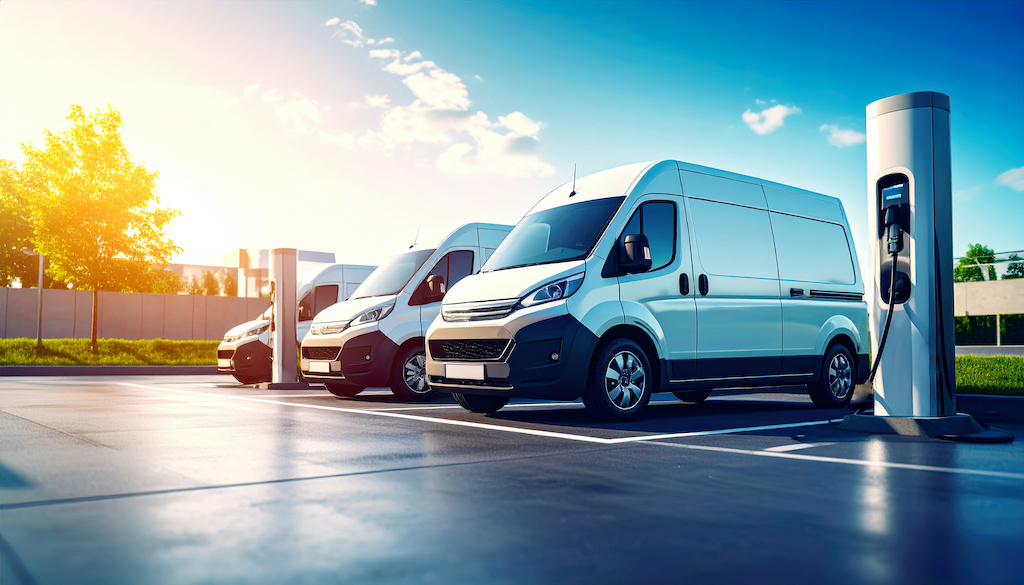
Electric vans are no longer niche, short-range vehicles limited to light urban use, they are now available in a growing range of sizes, weights, and configurations that can rival traditional diesel vans for capability and practicality.
But before making the switch, it’s worth considering how they’ll fit into your specific business operations.
A growing choice of models
Manufacturers are now offering electric vans in multiple body types – from small city vans to medium panel vans and large high-capacity models, with gross vehicle weights (GVWs) up to 4.25 tonnes. This means there’s likely to be an electric equivalent for almost any diesel van you currently operate.
Importantly, electric vans can be fitted with the same internal racking, ply lining, shelving, refrigeration units, and other specialist conversions as their diesel counterparts.
Whether you need a fully kitted-out trades van, a temperature-controlled delivery vehicle, or a branded fleet with full graphics, there’s no compromise in equipment or branding.
Financial incentives for switching
The UK Government offers the Plug-in Van Grant, which can reduce the purchase price of qualifying electric vans. There are also grants available to help fund the installation of workplace EV chargers, making it easier to charge vehicles on-site.
Other financial benefits include lower running costs, reduced road tax (VED) for electric vans, and exemption from charges in Clean Air Zones or London’s ULEZ.
Electricity is generally cheaper per mile than diesel, and maintenance costs tend to be lower thanks to fewer moving parts and less wear on brakes.
Key usage considerations
While electric vans can match diesel vans in functionality, there are some operational points to weigh up:
Daily mileage: Electric vans typically have a lower driving range than cars, and heavy loads, cold weather, or sustained motorway speeds can reduce this further. You’ll need to compare your average daily mileage to the real-world range of the vans you’re considering.
Charging locations: Think about where vehicles will charge. Will they return to a depot every night, or will drivers need access to public charging points during the day?
Charging time: Rapid charging can restore up to 80% battery capacity in as little as 30–60 minutes, but you’ll need to plan routes or schedules accordingly.
Load and payload: While modern electric vans can carry similar payloads to diesel equivalents, battery weight can slightly reduce capacity in some models.
Depreciation and resale: The used EV market is developing fast, so check current trends when forecasting whole-life costs.
Help is available
For many businesses, the question isn’t if electric vans can work, but how to integrate them smoothly. That’s where NEV comes in.
NEV can assess your operational requirements, advise on the most suitable electric van models, outline the financial incentives available, and even guide you through grant applications for workplace charging infrastructure.
From matching range to route, to ensuring your vehicles are racked, lined, and ready for work from day one, NEV can make the transition to electric both practical and cost-effective
nev leasing are personal and fleet management specialists helping and empowering our clients in the transition to electric vehicles.
Our team will be delighted to speak with you to discuss your personal circumstances and can offer industry leading experience and advice.
Why not contact us today for an initial chat and let us help you get to where you want to go.




![HYUNDAI I10 1.0 [63] Premium 5dr [Nav]](https://cdn.automotus.uk/store/CVD/car/104620/front_view/i10-hatch-hyi0-25.jpg)