

Maxus e-Terron 9: The Electric Pick-Up That’s a Better Solution Than You Might Think
Share on:
.png)
Our Review and Insights in to the Maxus e-Terron 9 Electric Pick-Up
It seemed the double-cab pick-up as we know it was pretty much dead after the BIK change that defines them as cars came in to force in April 25, with the only potential saviour being an all-electric version – and one that could do all the things the diesel pick-ups do!
Electric pick-ups are still very much a niche with only Isuzu and Maxus with current offerings – although the all new Toyota HiLux will also feature a full electric version within its line-up.
Both the Isuzu and Maxus have their shortcomings as they battle range and legislation – the Isuzu is VAT qualifying but achieves it at the expense of range – the Maxus e-Terron has the range but has compromised payload to achieve and is therefore not VAT qualifying.
First Impressions: Big Truck - Surprisingly easy to drive
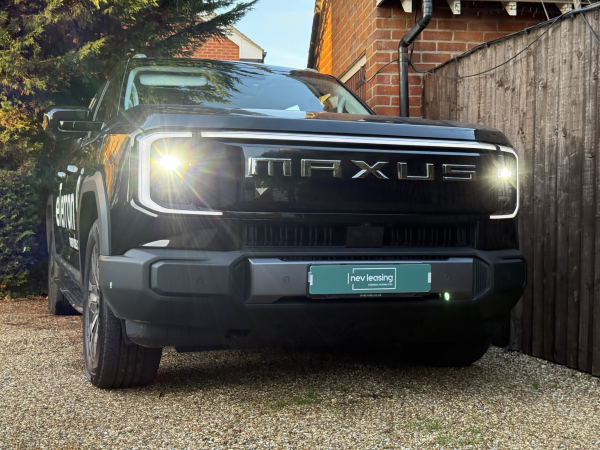 Having secured a Maxus e-Terron 9 demo for a customer we decided to take the opportunity to test drive it ourselves and see how good it actually is.
From the outside, the e-Terron 9 looks vast – and it is standing 6 inches longer than the Ford Ranger Wildtrak. The tall and angular body panels add to the look and the view is unapologetically “truck-like”.
Once inside and driving the e-Terron 9, however that sense starts to disappear. Steering is precise but light, visibility is good, and it feels very assured and comfortable on the road – even round the twisting and narrow country roads encountered delivering the demonstrator to the end user.
Real-world range accuracy that builds confidence
Our first notable highlight was the accuracy of the range - one regular narrative around electric vehicles is how quickly the range drops when you travel at speed on motorways and dual carriageways - but over our runs between Brighton and Colchester and up to Norwich the predicted range proved impressively honest - something that still can’t be taken for granted in the EV world. That accuracy matters, especially for businesses planning jobs, routes, and downtime. It’s not just about headline range figures, but whether the vehicle delivers what it promises day to day. For us the e-Terron 9 certainly delivered.
Towing Capability and Practical Expectations
Although a tow bar was fitted we didn’t get to test how well it towed. We have no doubt given the power of the batteries and motors the truck would easily cope with its stated 3500kg towing capacity – what will be interesting is then how the range stacks up.
The e-Terron comes with a usual range of load area options including a power roller shutter and canopy with opening windows. Our demonstrator came with the roller shutter which felt suitably robust with the additional confidence that it will continue to serve well after years of use.
Interior Design: Premium feel but is it entirely practical for work?
If there is perhaps one concern it is with the inside – not with the quality or fit of the materials used but the colour scheme in the Premium model tested – with a strong use of white in areas that will see significant use and likely to become dirty quickly in anything like a work environment. An alternative all dark interior colour scheme would be a welcome addition!
Aside the colour the cabin is very quiet and with little road noise intrusion. The materials feel good quality and the overall sense was that our model was more a lifestyle utility truck filling the space vacated by the BIK changes of a tax efficient commercial vehicle come family wagon. The lower and darker trimmed Luxury is perhaps the better option for the workhorse.
Payload, VAT and Leasing considerations
We’ve previously mentioned the payload compromise negating VAT reclamation which may deter many from making the switch. However with the uncertainty of future values a lease or contract hire may make more sense in which case the operator can at least reclaim half the VAT and will benefit from exceptionally low Benefit in Kind.
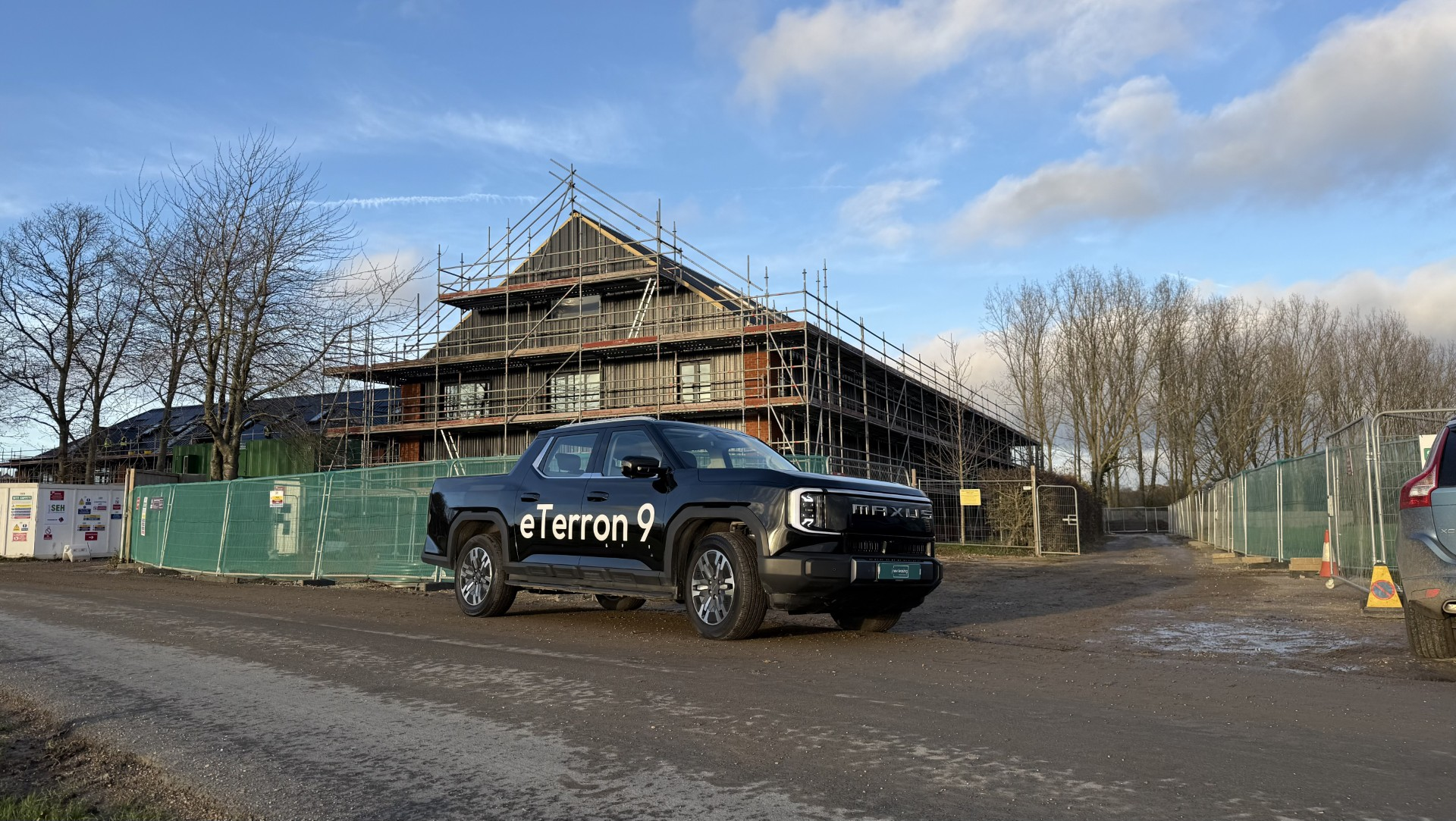
Maxus e-Terron 9 vs Isuzu D-Max Electric
Given all these factors where does that leave the Maxus e-Terron 9 – in the market and against the only current alternative the Isuzu D-Max electric.
The e-Terron 9 has a significantly lower list price than the D-Max Electric - but not 20% lower to equate for the VAT ... support terms are likely to higher on the Maxus and if you contract hire or finance lease you can reclaim half the VAT - probably time for a spreadsheet to accurately compare acquisition and overall contract hire costs.
Who is the e-Terron 9 really for?
For those who previously chose a double cab as a tax efficient company vehicle that carried the odd tool, hard hat and the family at week-ends -this absolutely works. The amount of use will suit contract hire and at least half the VAT reclaimed and the low BIK will remain attractive.
When it comes to farms and agricultural environments where many double-cabs are used they will most likely be more comfortable with the Isuzu that looks and feels much like its diesel counterpart – although with a range of just 163miles that could seriously reduce with a 3 ½ tonne trailer or cattle box on the back.
Final thoughts: A meaningful step forward for electric pick-ups
We feel the focus on range is the right option and whilst the Maxus e-Terron 9 isn’t about to replace the diesel pick-up overnight – but then it doesn’t need to just yet.
As an electric alternative that’s comfortable, honest about its range, and genuinely usable day to day, it feels like a meaningful step forward. Less compromise than expected. More capable than many will assume.
If you have pick-ups in your business and not sure where to go next we’d be happy to help - with impartial insights and unbiased information to enable you to plan the next stage of your commercial vehicle strategy with confidence and clarity
Call us on 01206 585837 or click here to arrange a call back at your convenience.





![HYUNDAI I10 1.0 [63] Premium 5dr [Nav]](https://cdn.automotus.uk/store/CVD/car/104620/front_view/i10-hatch-hyi0-25.jpg)