

What’s new from HMRC for fuel, EVs, and business mileage reimbursements for December 2025
Share on:
.jpg)
Effective from 1st December 2025, the updated rate are now live for both EV's and petrol / diesel cars.
- New fuel-reimbursement rates for petrol, diesel, LPG cars remain mostly stable.
- More importantly: for fully electric cars (EVs), MRHC has updated the Advisory Electricity Rate (AER). There are now two separate reimbursement rates depending on where you charge the car: at home or at a public charger.
What are the new EV mileage rates? (AER)

These rates replaced the old flat 7 p/mile for all charging, and are designed to reflect the real-world costs of electricity (domestic vs public) and EV running-costs.
What about petrol, diesel, LPG & hybrids?
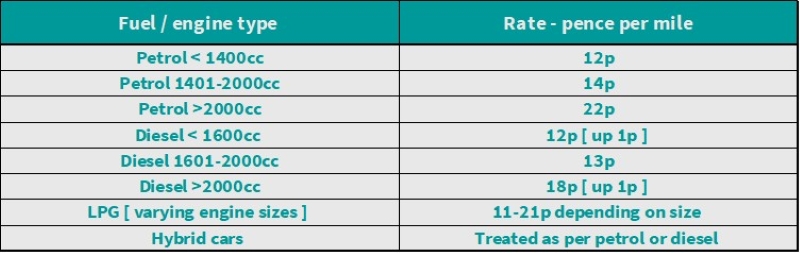
For most traditional-fuel company cars therefore, the rates have been broadly stable this quarter.
What does this change mean and does anyone benefit or worse off?
For EV drivers & fleets
- More realistic reimbursement: Public charging is more expensive than home charging and the split acknowledges this to ensure those using public chargers aren't penalised.
- Fairer treatment: Fewer EV users should be under-reimbursed compared to petrol/diesel drivers.
- Transparency: Businesses can choose to reimburse based on actual usage (proportion home vs public charging), if they can evidence.
For employers and lease/fleet managers
- Predictable reimbursement model: Easy to budget for home-charged EVs at 8p and public-charged ones at 14p
- ESG alignment: Encourages adoption of EVs without disadvantaging drivers who don’t have home chargers.
- Compliance: Following HMRC’s advisory rates keeps mileage reimbursement tax-efficient; paying above them requires evidence of cost.
What to watch out for
- Where cars are charged matters: Employers need a simple, fair way to track home vs public charging to justify reimbursements.
- For older petrol/diesel fleets, rates unchanged or slightly up: Mileage costs could rise slgihtly
- For hybrids; still treated as petrol/diesel as EV incentives don’t apply.
What Businesses Should Do Now
- Update your reimbursement mileage rates to 8 p / 14 p depending on charging location.
- For employees who use public chargers regularly, consider offering the full 14p as it helps retention and avoids underpayment.
- Time to revisit fleet structure or policy? Look to transition to EV or expand the electric fleet share in the business, promote wider EV uptake with EV salary-sacrifice benefits - especially if your employees are claiming mileage for petrol or diesel cars [potential cost saving as you will be re-imbursuing just the "fuel"
- Communicate the changes clearly to drivers and explain the split rates, encourage home charging where possible, but support public-charge users.
- For businesses using mixed fleets (fossil + EV), this update offers a good incentive to accelerate EV transition.
Final Thoughts
This is yet another subtle shift in policy towards fairer EV reimbursement in line with real costs, and for EV-driving employees, it closes a longstanding gap.
For employers, it offers a practical, transparent way to support greener, cost-efficient commuting.
We see this more reasons why EV salary-sacrifice and modern fleet management make strategic sense and can reduce transport costs outside of your fleet vehicles.
If you want help re-calculating costs, re-structuring your fleet or launching an EV-friendly benefit please call us on 01206 585837 or click here to arrange a call back at a time convenient for you.







![HYUNDAI I10 1.0 [63] Premium 5dr [Nav]](https://cdn.automotus.uk/store/CVD/car/104620/front_view/i10-hatch-hyi0-25.jpg)